
New Labs Enhance Cardiovascular Care
Texas Health Dallas has something to celebrate —two new lab suites to care for patients suffering from complex cardiovascular illnesses.
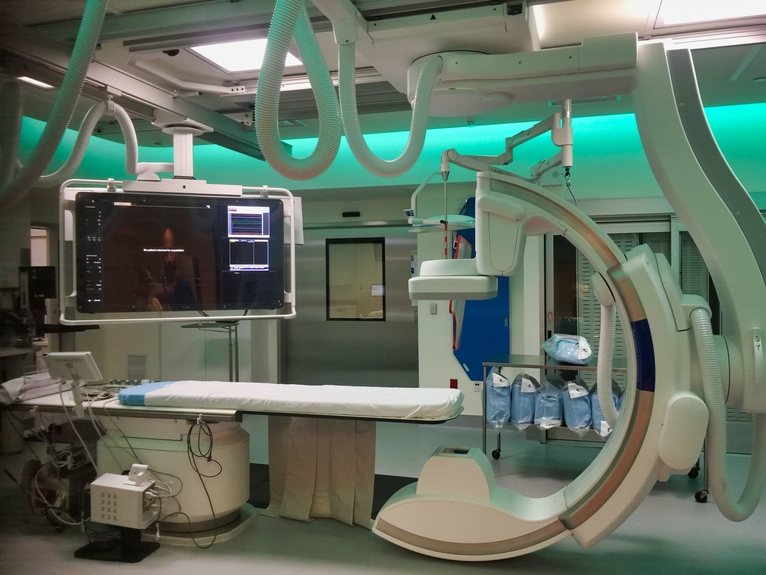
Texas Health Dallas recently opened the new space, which includes a new cardiac catheterization lab and an electrophysiology (EP) lab. Costing approximately $7 million to complete, the lab suites were constructed in six months and feature new equipment, including enhanced imaging capabilities that reduce radiation doses for patients. Now, the hospital has a total of four cath labs and two EP labs.
In the cath lab, physicians normally perform diagnostic procedures (using a catheter and sometimes a small camera to determine the severity of a patient’s specific illness) or interventional procedures (placing stents to repair or replace blocked arteries or using small catheters to remove plaque from damaged arteries, along with heart valve repair).
The EP lab, which treats heart problems associated with electrical signals in the cardiac muscle, allows physicians to complete three main types of procedures:
- Diagnostics – determine an abnormal heart rhythm and “electrical” activity of the heart
- Implantable device – placing a pacemaker, internal defibrillators, mechanical heart pumps
- Ablation – using a catheter to address the “electrical” disruption of the heart
Texas Health Dallas is the only hospital in the state participating in the National Cardiogenic Shock Initiative, which was developed by cardiologists at the Henry Ford Medical Center in Detroit. Two key components define the initiative, one being the placement of the mechanical heart pump, and the other is early identification. The device lessens the work of the heart during a heart attack. Texas Health Dallas follows a unique algorithm that allows doctors on the medical staff and nurses to systematically wean patients off certain medications that can sometimes create adverse effects. The overall goal is to improve survival in the sickest heart attack patients.
Texas Health Dallas is also a leader in the treatment of a specific type of heart failure called functional mitral regurgitation (MR). MR is defined as blood leaking back to the heart’s left atrium, which can lead to shortness of breath and fatigue.
“Recent federal rulings expanding the patient population for this specialized treatment emphasizes the heightened awareness and need for this technology,” said Levinda Walpole, Texas Health’s Southeast Zone Heart and Vascular Services regional administrator. “It’s good to know we’re able to help those who need it most.”
The cardiogenic shock initiative and the treatment of mitral regurgitation are just two examples of the hospital’s support of programs that help numerous people in North Texas with heart disease, said Dr. James Park, medical director of Heart & Vascular Services at Texas Health Dallas.
“Good outcomes depend on the immediate actions of those in the emergency department, cath lab and the ICU,” Dr. Park said. “It becomes a collaborative effort amongst physicians, nurses, radiology techs, you name it. That’s why these two new labs play a significant role in our ability to help more cardiovascular patients.”
The newer labs will be used by Park and other interventional cardiologists, along with vascular surgeons and electrophysiologists on the Texas Health Dallas medical staff.
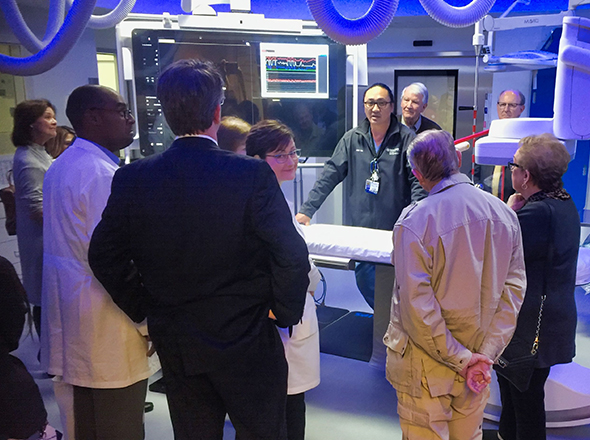
Pictured Right: Several Texas Health Dallas employees and physicians on the medical staff, recently gathered together to get a close-up view of the new labs.)
By Chandra Caradine • Posted April 9, 2019
