
Nurse practitioners are leading the care provided through Texas Health’s expanded Healthy Education and Lifestyles Program (HELP). Overseen by physicians on the medical staffs, nurse practitioners are helping individuals with lack of access to primary care, health insurance or a support system manage their chronic health conditions.
Anna Rabinovich, M.S.N., R.N., ANP-BC, CDE, leads the program at Texas Health HEB and recognizes the benefits of having nurse practitioners provide the care.
“As nurses, we take a holistic view of the patient and can really look at all the factors impacting a person’s health,” she said.
From Halfway Around the World to Texas Health HEB
Anna brings a global view to her role at HELP. Following a childhood in the USSR and education in Israel, Anna landed in New York where she finished her nursing degree and worked in the Emergency Department of a teaching hospital. Anna was motivated by her work environment to become a nurse practitioner.
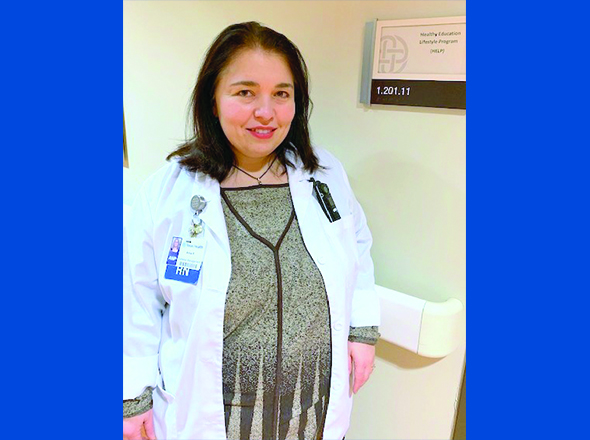
“We had a lot of autonomy in the ED, and being at a teaching hospital inspired me to want to do more,” she said.
After 13 years in New York, Anna moved to Texas and joined Texas Health HEB in 2014.
“I had decided I wanted to move with my family out of New York, and we fell in love with Texas when we first visited,” she said.
When she learned that HELP was expanding to Texas Health HEB, Anna was eager to be involved.
So Many Have So Little
HELP is designed to help the underserved and vulnerable population manage chronic health conditions such as diabetes, congestive heart failure and hypertension. The program can help uninsured patients avoid costly trips to the Emergency Department for managing their conditions. HELP nurse practitioners meet with patients monthly to provide education, support, accountability and care at a very low cost. They focus on empowering the patient and encouraging them to develop self-management.
“I’ve been surprised to see how many people in our community have so little and are in such great need,” said Anna. “Our patients are getting good, quality care through HELP, and some think it is too good to be true.”
The program also works to address the social factors impacting health by working with community collaborators, such as local pharmacies, eye doctors, counseling centers and food banks. At Texas Health HEB, Anna appreciates the wide range of support the program receives.
“From lab services to employee volunteers to the fitness center, it’s been great to see how the whole hospital has offered to help our patients,” she said.
Expansion and Impact
HELP began at Texas Health Azle in 2012 and expanded in the fall to Texas Health Alliance, Texas Health Cleburne, Texas Health Fort Worth, Texas Health HEB, Texas Health Huguley, Texas Health Kaufman, Texas Health Stephenville and Texas Health Southwest. Texas Health Dallas uses chronic disease management services through the Healing Hands Ministry, and the HELP model and scope of services is being added to existing clinics at Texas Health Arlington Memorial and Texas Health Denton.
Recent outcomes show that 89 percent of the diabetic population at HELP at Texas Health Azle either maintained or improved their A1C numbers. In addition, the hospital has experienced an 80 percent decrease in Emergency Department visits by HELP patients after they access the program. Inpatient admissions for these patients have also decreased by 94 percent. By regularly meeting with patients and providing guidance, HELP has created an overall cost savings of approximately $324,000 a year for Texas Health Azle.
by Brand Experience Communications • Posted December 13, 2018
