
In the high-tech world of robotic surgery, precision and innovation go hand in hand.
As a certified surgical technologist (CST) and the robotic and bariatric service line lead at Texas Health Presbyterian Hospital Flower Mound, Steven Bell plays a dynamic role, blending surgical expertise and advanced technology to elevate patient care.
“Steven exemplifies what it means to do your life’s best work,” said Sandi Gill, M.H.A., B.S.N., R.N., NEA-BC, chief nursing officer at Texas Health Flower Mound. “His dedication to innovation and patient safety set a standard that inspires everyone around him.”
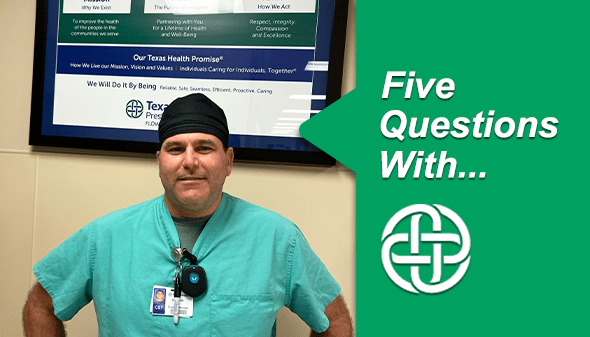
Keep reading to learn more about what drives Bell’s passion for surgical technology.
What did you want to be as a kid, and how did you ultimately choose your career?
As a child, I don’t recall having a specific career goal. Choosing my current path happened somewhat unexpectedly. I was between jobs when my wife, who worked in the finance office of the school I attended, mentioned some healthcare technology programs. Surgery caught my interest — it seemed genuinely appealing — so I decided to pursue it.
How do you spend your days at work?
I spend my day primarily in surgery, helping to heal injured or ill patients in the operating room. In addition to surgical duties, I also handle robotic education preparation and manage robotic supplies.
What’s your favorite part of your job, and what is the biggest challenge?
My favorite part of my job is that it consistently challenges me. I don’t like to sit idle. I’m always striving to improve myself and help others grow as well. This role offers many opportunities not only for personal development but also to inspire and support others on their journeys. The biggest challenge I face is that there simply isn’t enough time in the day to accomplish all the tasks and goals I aim to achieve.
What innovative approaches have you or your department adopted?
When I became CST robotic and bariatric lead, we faced a major challenge: tracking how often robotic arms and energy cords were reprocessed by their Instructions for Use (IFU) guidelines — a common issue nationwide. Working with Intuitive (developer of the da Vinci Surgical System), CensiTrac (a surgical instrument tracking system) and our sterile processing manager, we created a solution using the built-in QR codes to monitor usage so every patient is treated with equipment that meets safety standards.
How do you do your life’s best work at Texas Health?
I come to work with the mindset of continuously improving our department. I focus on enhancing the patient experience, identifying cost-saving opportunities for the hospital, which ultimately benefits us, and finding ways to reduce waste.
published
